

Exploring Pristina: A Journey Through History, Culture, and Modernity


Beata Bruggeman-Sekowska
If you’re searching for a fresh and exciting weekend escape, Prishtina should be at the top of your list. With its stylish hotels, amazing restaurants, and trendy bars, the capital of Kosovo offers a surprising blend of charm and modern energy. I had one of the best mojitos of my life here and that’s just the beginning. From vibrant streets and cultural landmarks to great shopping spots and lively nightlife, Prishtina is full of hidden gems waiting to be discovered.
The area of Pristina has been inhabited since the Neolithic era, originally settled by Early European Farmers. Archaeological evidence of this early presence has been found in sites such as Gračanica, Matiçan, and Ulpiana. Today, Pristina is a vibrant and modern city known for its dynamic urban life. It boasts a wide array of hotels, contemporary restaurants, lively bars and pubs, and some of the largest nightclubs in the country. Coffee bars are particularly emblematic of Pristina’s social culture and can be found on nearly every corner.

City view from the roof swimming pool in hotel Prishtina ©Beata Bruggeman-Sekowska
Located at the heart of Kosovo, Prishtina serves as the country’s capital and its primary economic, financial, political, and commercial hub. It hosts the central institutions of governance, including the offices of the President, Prime Minister, and the Parliament of Kosovo. Pristina connects the country by air, rail, and road. Pristina International Airport is the largest in Kosovo and one of the most significant in the region.Major motorways such as the R6 and R7 link the city with neighboring countries, including Albania and North Macedonia.

Restaurant in Prishtina with an amazing choice of wines and beer from Kosovo. ©Bruggeman-Sekowska
As Kosovo’s educational hub, Pristina is home to numerous public and private primary and secondary schools, as well as colleges, academies, and universities spread throughout the city. The University of Pristina, established in the 20th century, is the largest and oldest institution of higher education in the country. The city also hosts a number of libraries, with the most significant being the National Library of Kosovo, which holds a collection of over 1.8 million items, including books, periodicals, maps, microfilms, and other historical and cultural materials.
Pristina also serves as a center for international cultural collaboration. It is home to numerous foreign cultural institutions, including the Albanian Albanological Institute, Alliance Française, the British Council, the Goethe-Institut, the Friedrich Ebert Foundation, and the Council of Europe’s Information Office.

Artistic and trendy bars, pubs and cafés in Prishtina ©Bruggeman-Sekowska

Artistic and trendy bars, pubs and cafés in Prishtina ©Bruggeman-Sekowska
The city’s cultural calendar is highlighted by major international festivals. The Sunny Hill Festival, Kosovo’s largest music event, attracts over 100,000 attendees from around the world. It features top global artists such as Dua Lipa, Miley Cyrus, Calvin Harris, Martin Garrix, Afrojack, and many others.
In the realm of cinema, the Prishtina International Film Festival was launched following Kosovo’s 2008 declaration of independence. It showcases acclaimed international films and shines a spotlight on Kosovo’s growing film industry.
Among Pristina’s most celebrated classical music events is the Chopin Piano Fest Pristina, inaugurated in 2010 to mark the 200th anniversary of Frédéric Chopin’s birth. Organized by the Kosovo Chopin Association, it has become a cherished annual spring tradition. Another key event is the DAM Festival, a prominent international music festival that brings together young, talented musicians from across the globe. It bridges traditional and contemporary music, enriching the city’s cultural scene and reinforcing Pristina’s role as a cultural capital.
Looking ahead, Pristina is set to gain international attention as the host city of the 2030 Mediterranean Games—a major multi-sport event scheduled to take place from July 24 to August 4, 2030.
Here are the must-visit attractions.
The Newborn Monument
The famous Newborn Monument was unveiled on February 17, 2008, marking the independence of the youngest European country. Over the years, the monument has undergone various transformations, displaying various designs. In 2018, the monument displayed a “10” to mark Kosovo’s tenth anniversary of independence.

©Beata Bruggeman-Sekowska
Heroinat Memorial
Located in front of the iconic Newborn Monument, the Heroinat Memorial is a powerful tribute to the women who were victims during the Kosovo War. The Heroine Memorial was unveiled in 2025 and it presents a portrait which is made of 20,000 metal pins. Each of the pins represents a women who was a victim of the sexual violence during the conflict.

©Beata Bruggeman-Sekowska
National University Library of Kosovo
The National Library of Kosovo, designed by Croatian architect Andrija Mutnjaković, is known for its unique and unconventional architecture. Opened on November 25, 1982, the 16,500 m² building features 99 domes of varying sizes, zenith windows, and a distinctive metal mesh exterior—often linked to the traditional Albanian hat, the plisi.
Beyond serving as a library, it functions as a cultural and educational hub. It includes reading rooms, a periodicals room, special collections, a 150-seat amphitheatre, and a 75-seat meeting hall, with storage for up to two million volumes, most of which are housed in underground levels.
The main lobby hosts cultural events and features a mosaic marble floor and a large dome that fills the space with natural light. The library also coordinates other libraries in Kosovo and supports higher education, research, and access to databases.
©Beata Bruggeman-Sekowska
Cathedral of Saint Mother Teresa’s Bell Tower
Dominating the skyline of Pristina, the Cathedral of Saint Mother Teresa was completed in 2012, honoring the legacy of Mother Teresa, one of the world’s most respected humanitarians. The foundation stone was laid in 2005 by Kosovo’s former president Ibrahim Rugova, and the cathedral was inaugurated in 2010, coinciding with the anniversary of Mother Teresa’s death. It was formally consecrated in 2017, 20 years after her passing. The cathedral’s bell tower offers impressive panoramic views of the city.

©Beata Bruggeman-Sekowska
Mother Teresa Boulevard
Mother Teresa bustling Boulevard is the vibrant heart of Pristina, with many cafes, shops, and cultural venues. The boulevard often hosts events and performances.

©Beata Bruggeman-Sekowska
Great Hammam of Pristina
The Great Hammam of Pristina is a historical Ottoman-era monument that dates back to the 15th century. Originally part of the Imperial Mosque complex, it served as a gathering place for the community, particularly during the spring and summer months. The building has undergone several changes over the years but still remains a symbol of the old Pristina, together with important landmarks such as the Clock Tower and the Çarshia Mosque.
Çarshi Mosque
The Çarshi Mosque, also known as the Bazaar Mosque or the Taş Mosque (Stone Mosque), is the oldest building in Pristina and a significant part of the city’s Ottoman heritage. Its construction began in 1389 under Ottoman Sultan Bayezid I and was completed during the reign of Sultan Murad II in the 15th century. The mosque was built to commemorate the Ottoman victory in the Battle of Kosovo. The Çarshi Mosque has been restored several times over the centuries, but its iconic stone minaret, which has stood for over six centuries, remains one of the defining features of Pristina’s skyline.

©Beata Bruggeman-Sekowska
Skanderbeg statue in Skanderbeg Square
Located in the heart of Pristina, the Skanderbeg Statue honors one of the most iconic figures in Albanian history: national hero who fought fiercely against Ottoman forces. The statue was transported from Krujë in Albania to Pristina, where it now stands in Skanderbeg Square. Alongside the statue, visitors will find a war memorial dedicated to the victims of the Kosovo War, with photographs of those missing from the conflict.

©Beata Bruggeman-Sekowska
Statue of Bill Clinton
Pristina’s statue of former U.S. President Bill Clinton honors Clinton’s support during the Kosovo War and has become a popular landmark in Pristina. It is 11-foot-high (3.4 m) and it was unveiled on 1 November 2009, and attended by the former president spoke.

©Beata Bruggeman-Sekowska
Kosovo Museum
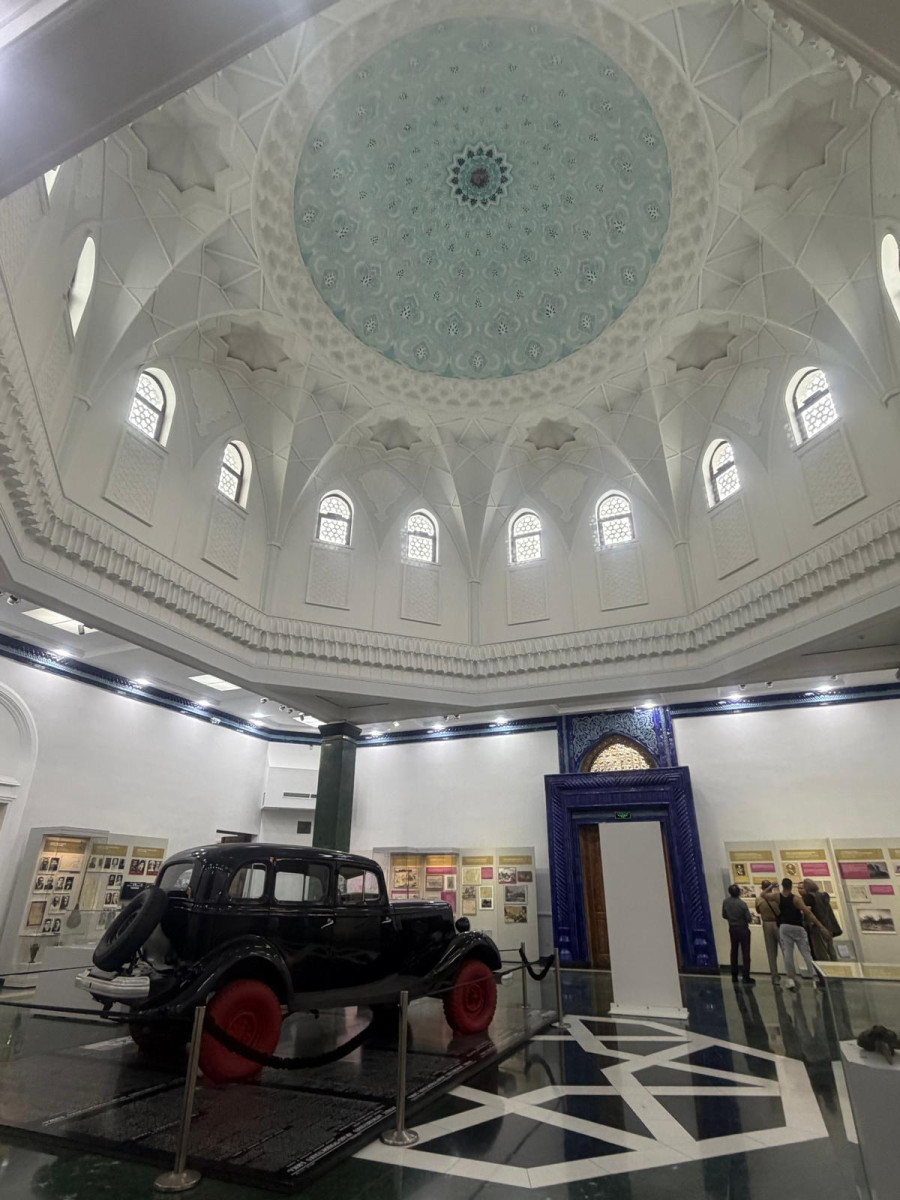
The Kosovo Museum is located in a villa that was built by the Austrians for the Turkish army in 1898. After its use by the Yugoslav national army until 1975, the museum was located here. The museum details life in the Illyrian, Dardanian, and Roman periods, with excellent English-language texts. One of the highlights is the 6000-year-old statue found at Tjerrtorja in 1956, which was returned to Pristina in 2002. In front of the building, artillery hardware and two large Jewish gravestones serving as reminders of recent historical events, including the exodus dramas that have shaped Kosovo’s modern history.
Ethnographic Museum
Located in an Ottoman-era building, the Ethnographic Museum offers an interesting look into the traditional life of Kosovo’s inhabitants wit hits rich collection of artifacts, clothing, and household. The museum is located in the Emin Gjiku Complex, an 18th-century structure that has been beautifully restored.

©Beata Bruggeman-Sekowska
Old Green Market
It is a vibrant hub where vendors sell fresh produce, handmade crafts, and a variety of goods. The market offers an authentic look at daily commerce in Pristina, providing visitors with a chance to sample local delicacies and purchase unique souvenirs from the heart of the city.

©Beata Bruggeman-Sekowska
Germia Park
It is located just a short distance from Pristina’s city center with a large swimming pools, hiking trails, green spaces offers lots of options for relaxation and a wonderful view from Butos Peak, the park’s highest point.
Bear Sanctuary, Prishtina
Located around 25 km from Prishtina, it is definitely a place you cannot miss. The Bear Sanctuary Prishtina is really wonderful for visitors of all ages. This sanctuary offers a safe and caring home to rescued and traumatised brown bears. Currently, it is home to 18 bears, each with its own name and story—and even one lion, named Gjon.
The sanctuary is set in beautiful natural surroundings near Badovc Lake, and covers an area of 16 hectares. In 2018, a new environmental education center called Thesaret e Natyrës (“Nature’s Treasures”) was opened to help raise awareness about animal welfare and environmental protection in Kosovo. Visitors can explore the sanctuary on their own or join a guided tour. The staff is friendly, speaks excellent English, and is always ready to help. There are fun activities for children, including a maze, playground, and treasure hunt. You’ll also find a great restaurant and a nice gift shop on-site.

©Beata Bruggeman-Sekowska
Gračanica Monastery
When in Pristina, you cannot miss the Gračanica Monastery, a significant Serbian Orthodox site that offers a glimpse into Kosovo’s rich history. Built in 1321 by Serbian King Stefan Milutin, it is located in the Serbian enclave of Gračanica, just 5 kilometers from Pristina and near Lipjan. The Gračanica Monastery has long been recognized for its cultural and historical importance. In 1990, it was declared a Monument of Culture of Exceptional Importance, and in 2006, it was inscribed on UNESCO’s World Heritage List under the designation “Medieval Monuments in Kosovo,” an extension of the Visoki Dečani site, which is listed as a World Heritage in Danger.

©Beata Bruggeman-Sekowska
Ulpiana’s Archaeological Park
Just 12 kilometers from Pristina, in the municipality of Gračanica, lies Ulpiana, an ancient Roman city founded in the early 2nd century AD by Emperor Trajan. Situated near modern-day Lipjan, the site was once a key urban center in the Roman province of Dardania and an important settlement for the Dardanian Kingdom. Today, Ulpiana’s Archaeological Park offers an interesting glimpse into the past, with excavations uncovering well-preserved remnants of city walls, basilicas, mosaics, and other structures. These artifacts, including pottery and coins, provide valuable insight into Roman urban planning and the region’s history.
The Brotherhood and Unity Monument
One of the most recognizable Yugoslav-era memorials.It commemorates fallen soldiers in “National Liberation War”/Second World War in Prishtina. It was constructed in 1961 based on a conceptual design by sculptor Miodrag Živković.

©Beata Bruggeman-Sekowska
Grand Hotel Prishtina
Construction of the Grand Hotel began in 1974 and was completed just four years later. In 1978, the hotel officially opened its doors, quickly becoming an iconic landmark in the city and one of the most prestigious hotels in the region. The Grand Hotel featured 13 floors—12 dedicated to guest rooms and the 13th housing a restaurant. It offered a total of 360 rooms, including 202 single rooms, 142 double rooms, 9 triple rooms, 9 apartments, and 2 residences. At its peak, the hotel employed more than 800 staff members.
In May 1979, Josip Broz Tito visited Kosovo shortly before his death in 1980. During his stay in Pristina, he was accommodated in a suite at the Grand Hotel. We will soon broadcast on our youtube channel the footage from this suite. Today, however, only about 1% of the hotel’s rooms remain in use for guests.

©Beata Bruggeman-Sekowska

©Beata Bruggeman-Sekowska

Author: Beata Bruggeman-Sękowska is an international journalist and author with a background in American Culture Studies from Warsaw University. She is the chief editor of the Central and Eastern Europe Center and president of the European Institute on Communist Oppression. Born in Warsaw and currently residing in the Netherlands, Beata has roots in Lviv, Ukraine and has Armenian heritage.
Read also:
Watch also: