

Kosovo Celebrates 18 Years of Independence at the Historic Nieuwe Kerk in The Hague


photo: © Studio Dijkgraaf
By Beata Bruggeman-Sekowska
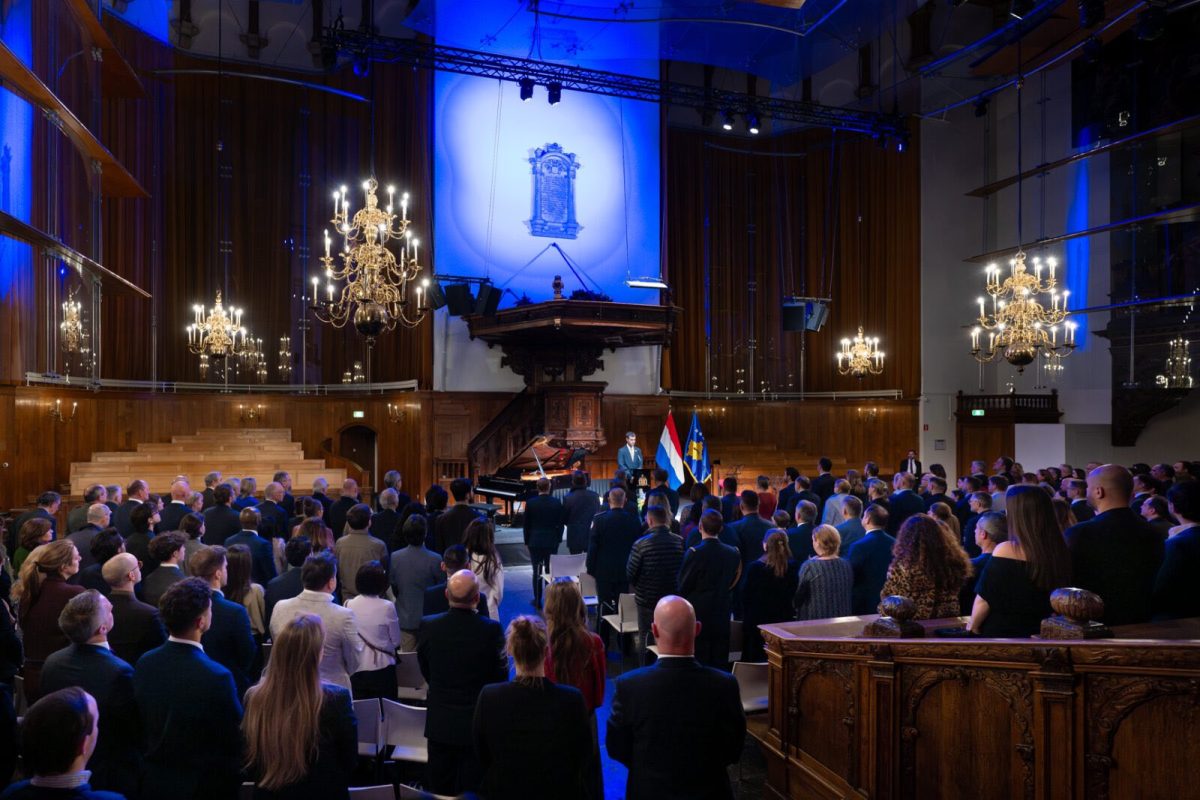
On February 17, 2026, the Embassy of Kosovo in The Hague hosted a concert and reception at the stunning Nieuwe Kerk to mark the 18th anniversary of the Independence of the Republic of Kosovo.
The celebrations were attended by Glauk Konjufca, First Deputy Prime Minister and Minister of Foreign Affairs and Diaspora of the Republic of Kosovo. In his address, he highlighted the foreign policy priorities of the new government, reaffirmed Kosovo’s Euro-Atlantic trajectory, and expressed deep appreciation for the Kosovar diaspora in the Netherlands.

©Beata Bruggeman-Sekowska

© Studio Dijkgraaf
Ambassador Dr. Dren Doli, in his speech, emphasized the strong and enduring relations between Kosovo and the Netherlands, as well as the ongoing cooperation across various fields. He also expressed his gratitude to the Kosovar diaspora in the Netherlands, recognizing them as vital representatives of Kosovo in the country.

© Studio Dijkgraaf
© Studio Dijkgraaf
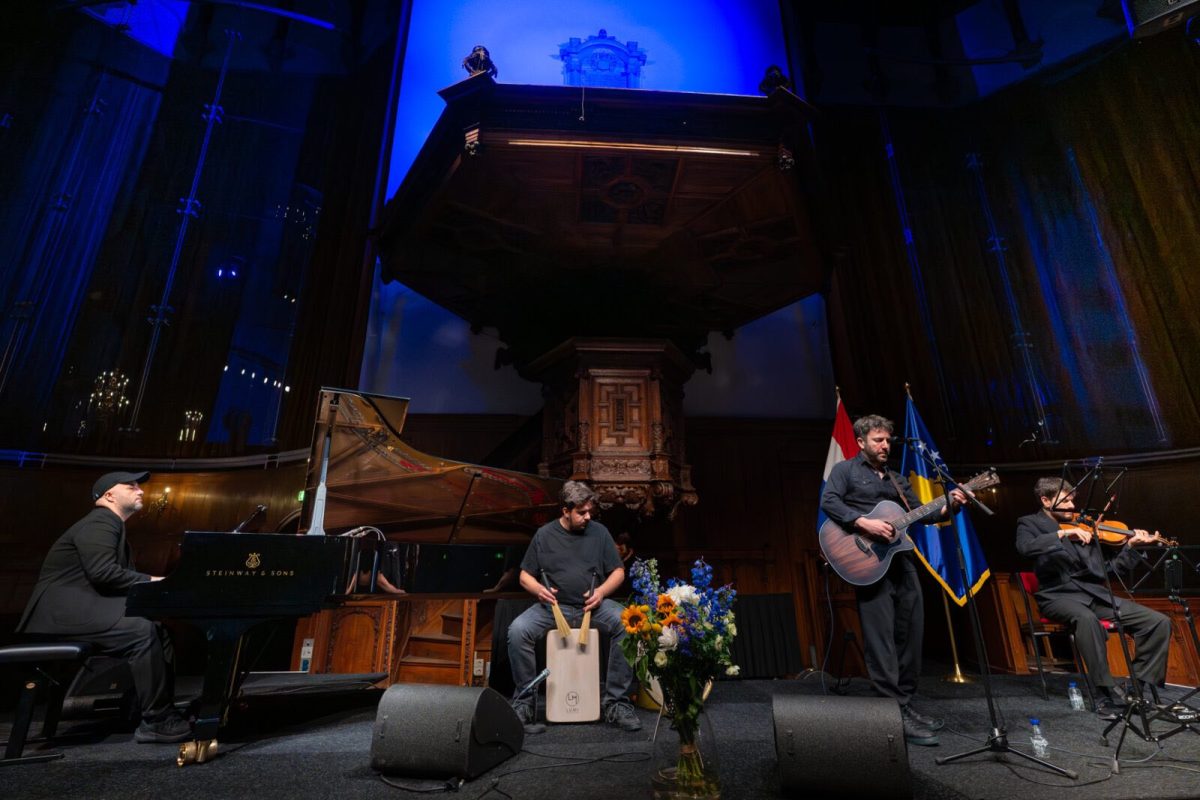
The speeches were followed by a mesmerizing performance by the Petrit Çarkaxhiu Band who presented an unforgettable and emotional repertoire. As Dr.sc. Shqipe Hajredini-Doli in her music review says: ‘’Through meaningful lyrics, Petrit captures both personal and collective experiences. His music serves as a mirror for a generation for whom Kosova was a beacon of hope, reminding listeners of both-who we were and who we are today!. In doing so, Petrit not only mediates through his art but also becomes a symbol of cultural identity and generational memory’’. He was accompanied by Dalvin Mamusha on violin, Tanju Süleyman on percussion, and Adem Gülşen on piano.

© Studio Dijkgraaf
- © Studio Dijkgraaf
The evening concluded with a reception featuring traditional Kosovar cuisine and wines, allowing guests to experience the rich culinary heritage of Kosovo.Guests were also given the opportunity to visit a stand showcasing Kosovo’s culture and tourism.
The event was attended by ambassadors and representatives of diplomatic missions based in the Netherlands, Dutch KFOR veterans who served in Kosovo, representatives of Dutch institutions and international organizations, members of the Kosovar diaspora, and friends of Kosovo — all honoring the occasion with their presence.

© Studio Dijkgraaf

© Studio Dijkgraaf


© Beata Bruggeman-Sekowska
The Nieuwe Kerk, built in 1656, is a historical landmark at the heart of The Hague. Known for its classical and baroque architecture, the church also holds the legacy of the renowned philosopher Baruch Spinoza, who is buried there. Today, the Nieuwe Kerk remains a symbol of tolerance and solidarity, providing a fitting setting for the celebrations.

© Beata Bruggeman-Sekowska
Historic Background
Kosovo has undergone immense challenges and achieved significant milestones in the past 18 years. Its independence came at a tremendous cost, following a systematic campaign of terror, including murders, rapes, arsons, and severe maltreatment. The Kosovo War resulted in 13,500 deaths or missing persons and the displacement of 1.2 to 1.45 million people.
The declaration of independence was adopted on 17 February 2008 by the Assembly of Kosovo. In a meeting attended by 109 of the 120 members, the assembly unanimously declared Kosovo independent from Serbia, while the 11 representatives of the Serb minority boycotted the proceedings.
Among the G20 countries, eleven — including all seven G7 members: Australia, Canada, France, Germany, Italy, Japan, Saudi Arabia, South Korea, Turkey, the United Kingdom, and the United States — have recognised Kosovo as an independent state. Kosovo has been recognised by 117 countries, including major European Union nations. Serbia, backed by Russia, continues to refuse recognition. Although Serbia does not recognise Kosovo as an independent country, under the Brussels Agreement (19 April 2013), it is obliged to begin normalizing relations with Kosovo.
Kosovo is not yet a member of the United Nations, the European Union, or NATO. However, it has signed a Stabilisation and Association Agreement (SAA) with the EU, representing a key step toward EU integration.
Since independence, Kosovo has joined numerous international institutions, including:
- International Monetary Fund (IMF) – since 29 June 2009
- World Bank – since 29 June 2009
- World Customs Organization – since 3 March 2017
- International Road Transport Union (IRU) – since May 2009
- International Bar Association (IBA) – since 28 May 2009
- International Olympic Committee (IOC) – since 9 December 2014
- Union of European Football Associations (UEFA) – since 2016
- Fédération Internationale de Football Association (FIFA) – since 13 May 2016
- International Orienteering Federation (IOF) – and many other international sports organisations
In June 2014, Kosovo became a member of the Venice Commission, the advisory body of the Council of Europe.
Photo’s: © Studio Dijkgraaf (with permission of the Embassy of the Republic of Kosovo in the Hague), ©Beata Bruggeman-Sekowska

Author: Beata Bruggeman-Sękowska is an award-winning Dutch-Polish journalist and author. She is the chief editor of the Central and Eastern Europe Center and president of the European Institute on Communist Oppression. Born in Warsaw, Poland and currently residing in the Netherlands, Beata has roots in Lviv, Ukraine and has Armenian heritage.
Read also:
Why Kosovo should be your next destination
Exploring Pristina: A Journey Through History, Culture, and Modernity
The Heroinat Memorial: Honoring Kosovo’s Forgotten Heroines
The Iconic NEWBORN Monument: Where Freedom takes Center Stage
Pejë: A City of History, Culture and Natural Beauty in Kosovo
Prizren: The Cultural Heart of Kosovo
Gjakova: most charming town of Kosovo
Visoki Dečani monastery: the spiritual and artistic heart of the Balkans
Patriarchate of Peć Monastery
Mitrovica: A City Shaped by Time