

Honoring the Fallen, Embracing the Legacy: Memorial Day at Margraten

By Beata Bruggeman-Sekowska
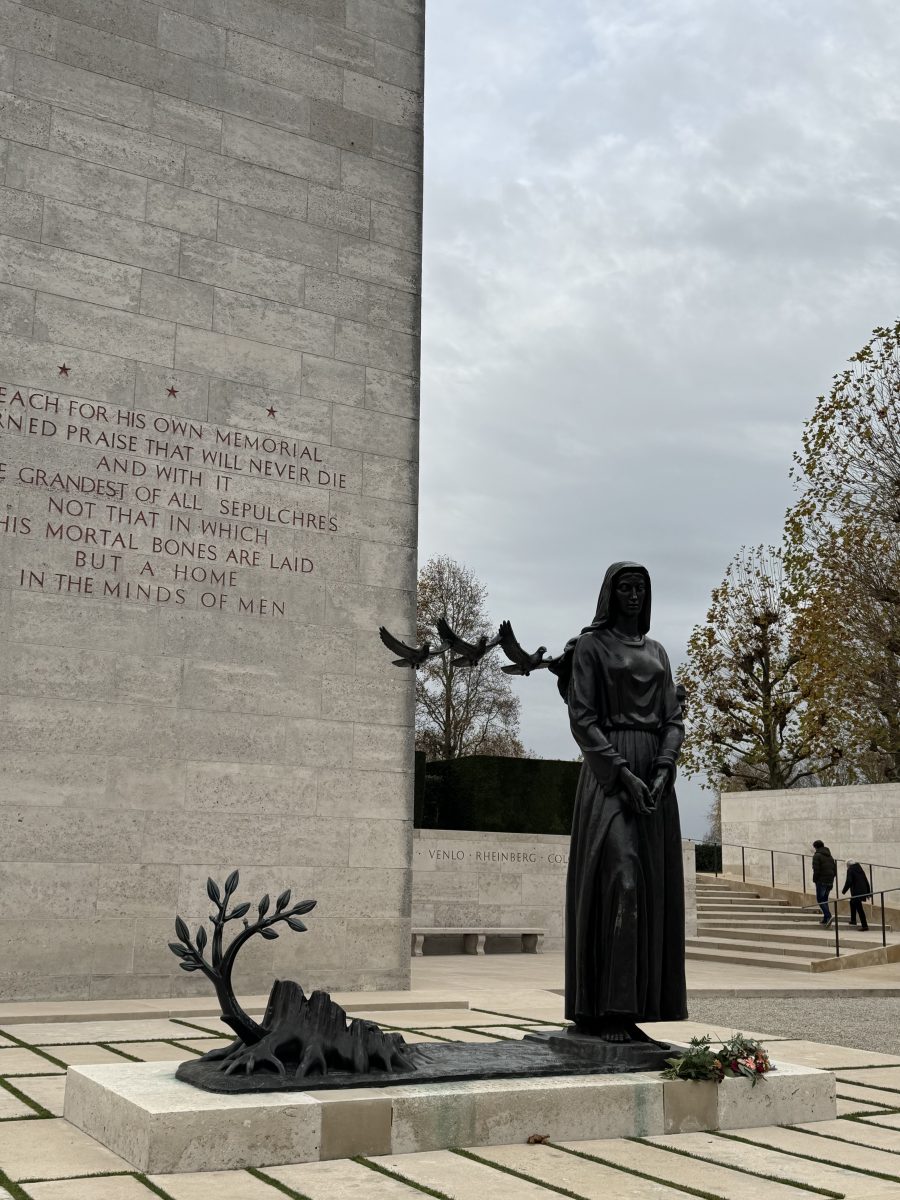
Honored to attend Memorial Day at the Netherlands American Cemetery in Margraten, where we remembered 8288 American soldiers who lost their lives during World War II and are buried on this hallowed ground. Another 1,722 missing are honored on the Walls of the Missing. Each grave is adopted by a Dutch family — a moving tradition that speaks to the lasting gratitude and deep connection between our nations.
Seated at the front of the ceremony were three remarkable American veterans: Dominick Critelli (104), Arnold Strauch (99), and Bob Larson (98) — among the last living witnesses of the war they helped win. Despite the applause and warm recognition they received, they remained humble. “I don’t feel like a hero,” said Critelli. “The real heroes are the boys who never came home — the 21- and 22-year-olds who gave their lives and are buried here.”
This year’s commemoration marked 80 years since the liberation of the Netherlands. It was attended by King Willem-Alexander, Prime Minister Dick Schoof, Governor of Limburg Emile Roemer, Minister of Defense Ruben Brekelmans, Chief of Defense General Onno Eichelsheim, several local mayors, Bishop Ron van den Hout, and U.S. representatives including Brigadier General Andrew Saslav, executive director of operations Thomas Spoehr, an acting Ambassador Marcus Micheli, ambassadors and/or representatives of various Embassies including a.o. Polish, British, Australian, French, New Zealand and honorary consuls of France, Germany, Hungary, Israel, Lithuania and Luxemburg.
In his speech, Prime Minister Schoof emphasized the enduring importance of defending freedom: “We must continue investing in the defense of the freedom for which Allied soldiers fought so hard in World War II. That’s why the upcoming NATO summit must reaffirm unity — to show that their sacrifice was not in vain.”
He spoke of a moral obligation we owe to the fallen. “We live in a time where peace can no longer be taken for granted, and remembrance alone is not enough. How often have we said freedom is not self-evident? Today, we must recognize that these words come with responsibilities.”

©Beata Bruggeman-Sekowska
Governor Emile Roemer shared the story of three young American soldiers, the same age as his father — a Dutch resistance fighter — who died during the Battle of Overloon on October 4, 1944, when their tanks were engulfed in flames. Their story underscored the personal, human cost of war.
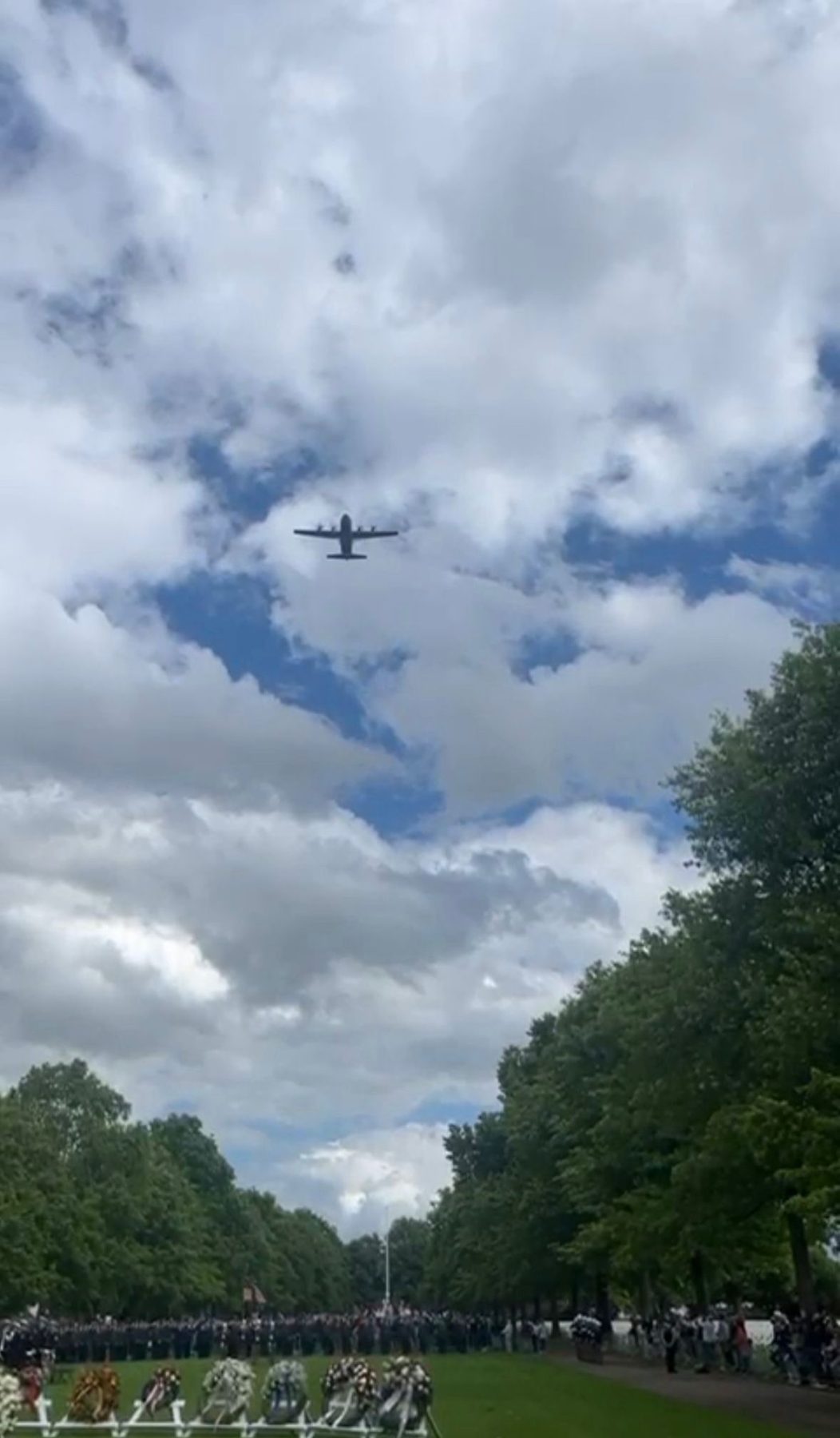
The ceremony included three flyovers, an uncommon but powerful tribute. A C-130 Hercules transport plane, a vintage Spitfire, and four Royal Netherlands Air Force Star Fighters passed overhead. The Star Fighters flew in a missing man formation, with one aircraft veering away to honor the fallen — a solemn and unforgettable symbol.

©Beata Bruggeman-Sekowska
Eighteen wreaths were laid following the speeches.The first two were placed by King Willem-Alexander and U.S. Ambassador Micheli, with others from the Dutch government, the American and Dutch armed forces, and the NATO alliance and many ambassies including Polish, French, British and Australian.
At the end of the ceremony, the King and Prime Minister personally met with the three U.S. veterans — Critelli, Strauch, and Larson.
In a final recognition, the cemetery was awarded the Gold Medal of Honor by the municipality of Eijsden-Margraten — its highest distinction. Mayor Alain Krijnen praised the cemetery for its “unique bond with the community.”
Photos: ©Beata Bruggeman-Sekowska