

Joseph Kiselewski: Polish Roots, American Recognition

Beata Bruggeman-Sekowska
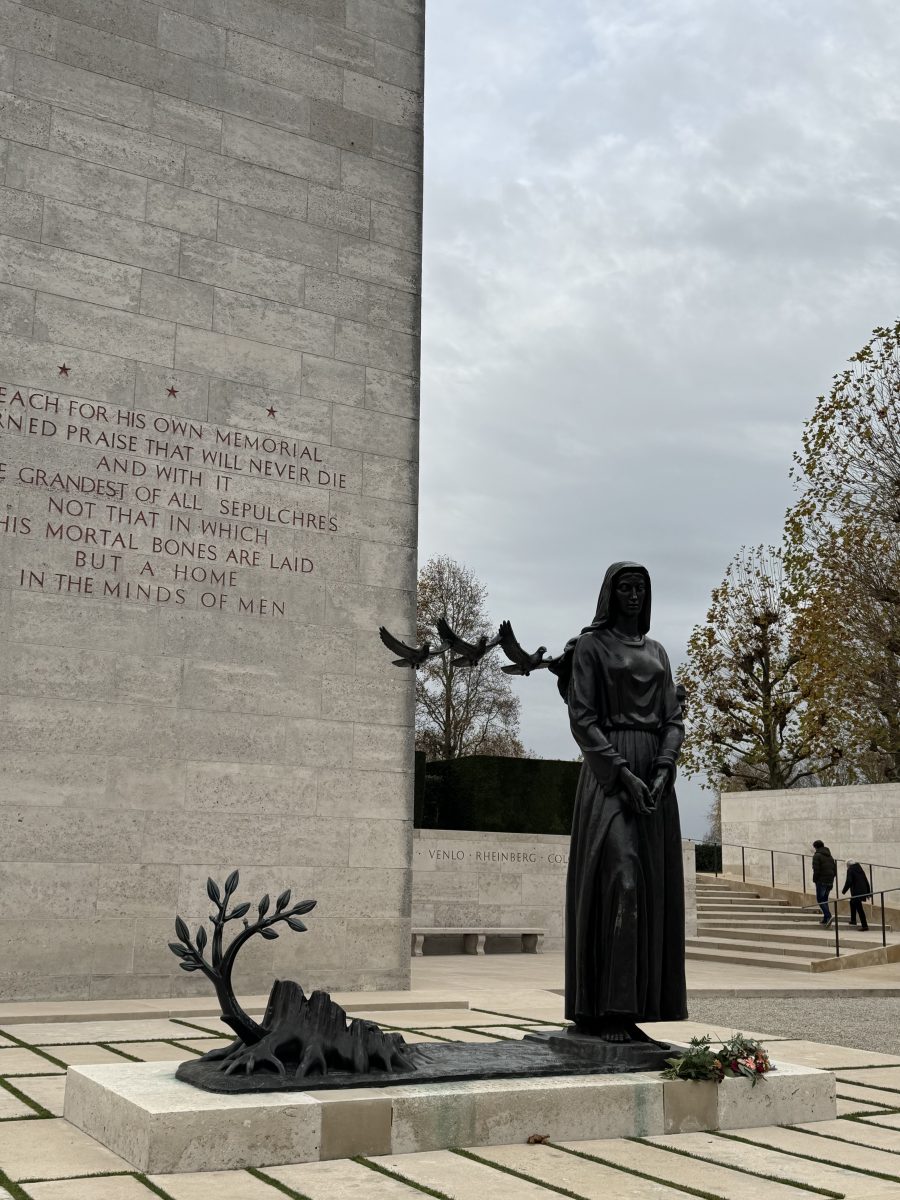
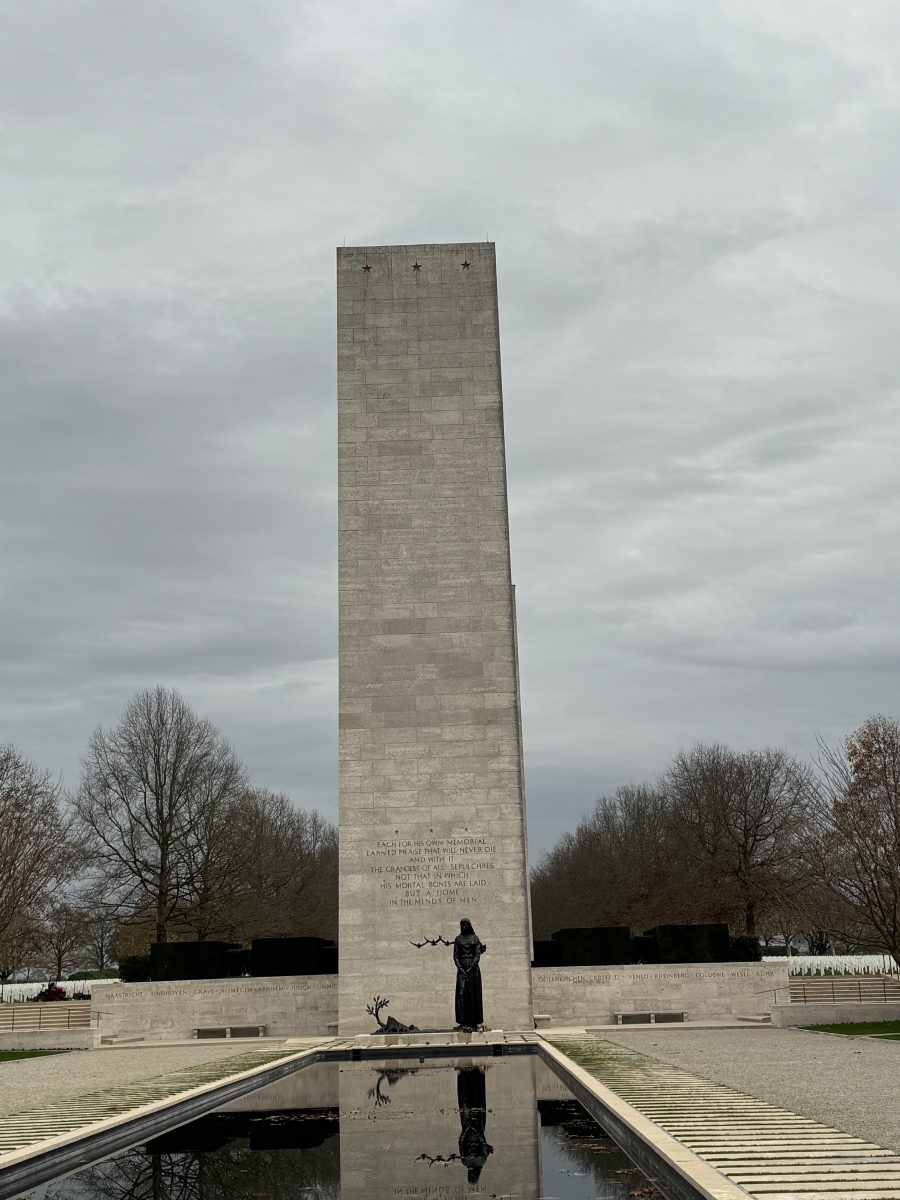
At a very special place — the Netherlands American Cemetery and Memorial in Margraten, the Netherlands — stands a sculpture that continues to move visitors deeply. This is the only American military cemetery in the Netherlands, where 8,288 American soldiers who died during World War II are buried. At the base of the memorial tower, facing the reflecting water, stands a bronze sculpture of a mourning woman. Its creator was Joseph (Jo) Kiselewski, an outstanding American sculptor of Polish descent.
“The Mourning Woman” – a Message of Remembrance and Peace
The sculpture bears the title “Peace”, and is also known as “The Mourning Woman.” It depicts a mother mourning a son who did not return from war. Beside her stands a broken tree — a symbol of the devastation of World War II. From its trunk, however, a young branch grows, representing renewal and hope. Above the figure hover three doves, reinforcing the message of peace. Kiselewski regarded this sculpture as his masterpiece. It was cast in bronze by the Battaglia Foundry in Milan and remains one of the most powerful memorial artworks at Margraten.
© Beata Bruggeman-Sekowska
Polish Roots
Joseph Kiselewski was born on February 16, 1901, near Browerville, Minnesota, to Polish immigrant parents. He was the fourth of nine children, and Polish was his first language. As he wrote in his autobiography: “Polish was my first language. At home we spoke only Polish. I was the fourth of nine children.”
He grew up in a strong Polish-American community with Polish schools, churches, and clergy, which deeply influenced his identity and artistic sensitivity.
Artistic Path
Kiselewski studied in Minneapolis, New York, Paris, and Rome. In 1925 he received the prestigious Beaux-Arts Prize in Paris, and from 1926 to 1929 he was a Prix de Rome fellow. From 1929 onward, he maintained his own studio in New York, where he worked until 1980.
In 1936 he became an Associate of the National Academy of Design, and in 1944 a full Academician. His works were widely exhibited in museums throughout the United States.
Medals and Public Works
Kiselewski was also a distinguished medalist. He received the J. Sanford Saltus Medal for excellence in the art of medal making. He designed numerous medals for the United States Army and the U.S. Air Force, including the Army Good Conduct Medal and the American Defense Service Medal.
He is also the creator of the bronze monument to General Casimir Pulaski in Milwaukee. His sculptures and reliefs can be found in the Bronx County Courthouse, New York public schools, and federal buildings, including works for the U.S. House of Representatives.
Legacy
Between 1977 and 1980, Kiselewski donated his archives to the Smithsonian Institution. He died on February 26, 1988. In 1987, the Governor of Minnesota officially proclaimed “Joe Kiselewski Day”, honoring his contribution to American culture.
The sculpture “The Mourning Woman” in Margraten remains one of the most moving symbols of remembrance, peace, and sacrifice — and a lasting testament to Polish roots in American art history.
More info: https://www.kiselewskisculpture.com/autobiography
Photos: ©Beata Bruggeman-Sekowska

Author: Beata Bruggeman-Sękowska is an award-winning Dutch-Polish journalist and author with a background in the culture and history of the USA. She is the chief editor of the Central and Eastern Europe Center and president of the European Institute on Communist Oppression. Born in Warsaw, Poland and currently residing in the Netherlands, Beata has roots in Lviv, Ukraine and has Armenian heritage.