

The State Museum of Memory of Victims of Repression in Tashkent: Commemorating the Victims of Political Repression

Beata Bruggeman-Sękowska
In April 2026, I had the opportunity to visit a fascinating museum in Tashkent, the capital of Uzbekistan, dedicated to the victims of Tsarist and Soviet rule. The State Museum of Memory of Victims of Repression offers a compelling insight into one of the most difficult chapters of the country’s modern history, preserving the memory of those who suffered political repression and persecution.
After Uzbekistan declared its independence in 1991 the country decided to restore memory of those called ‘’enemies of the people’’ who were innocently victimised, repressed during the years of Tsarist and Soviet rule and whose names were erased from the history of the Uzbek people and culture. On 12th May 1999, a commission was established to immortalise the memory of the victims and in July of the same year, based on a government decision, the charitable foundation “Shahidlar Xotirasi” (trans. – “Memory of Martyrs”) was established. As a result, the formation of exhibition materials for the future State Museum of Memory of Victims of Repression
On May 12, 2000, the ceremonial opening of the memorial complex “Memorial of Martyrs” established in the Yunusabad district of Tashkent took place. Following the Decree of the First President of the Republic of Uzbekistan, I. A. Karimov, dated 1 May 2001, “On Establishing the Day of Commemoration of the Victims of Repression,” the Museum of Memory of Victims of Repression was established within the Memorial of Martyrs complex. The museum was officially opened on 31 August 2002, on the first national Day of Remembrance of the Victims of Repression, a commemorative day established to honour those who suffered political persecution and repression.
The State Museum of Memory of Victims of Repression is located opposite the TV Tower in the Martyrs’ Memorial Complex that honors the victims. The setting is really impressive and a must see location, comprising two buildings, a well-kept and organized park and a rotunda. The rotunda, covered by a beautiful turquoise dome with eight marble columns, holds a memorial stone with an inscription: “The memory of those who died for their country will live forever.” The location for the memorial complex and the museum was chosen not without the reason. This place served as a place of execution of many victims of repressions of the Soviet state from the 20s of the 20th century until the beginning of the Second World War. They were buried in three mass graves here. The memorial complex combines the territories of these three mass graves. The symbolic memorial tomb is the commemorative center of the complex, while the museum serves as the educational center.
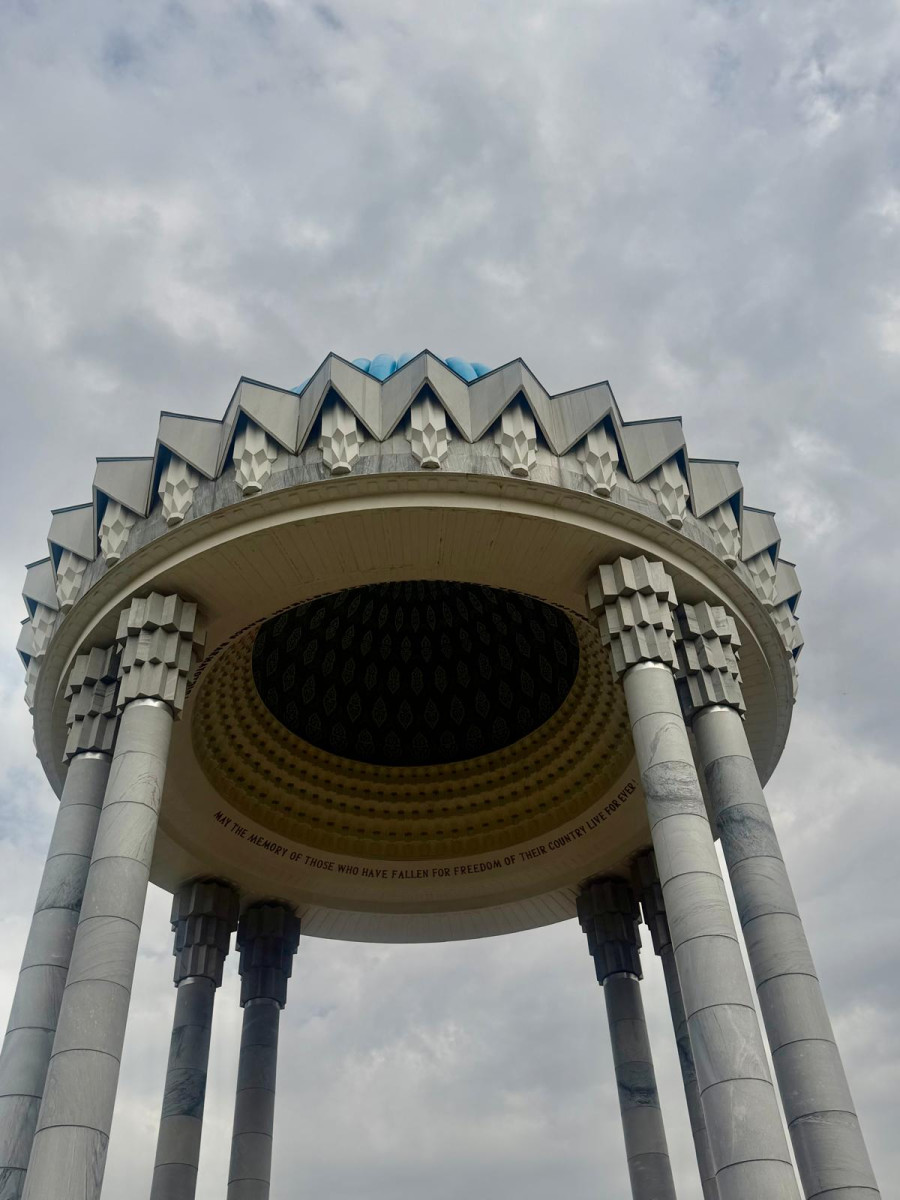
photo:©Beata Bruggeman-Sękowska
According to the «Shahidlar Hotirasi» (Victims of Repressions) Foundation, 10,700 people were arrested and convicted on the territory of modern Uzbekistan in September 1937. Of these, 3,613 were sentenced to death, and 7,087 were sentenced to 8 to 10 years in labor camps. In the period from 13 to 28 November, 1,611 people were convicted, and in December 1937 the number of convicts was 3,610. Among the victims were prominent figures, scientists and writers, among whom were Abdullah Qadiri, Fitrat, Chulpon.
The museum and the exhibits
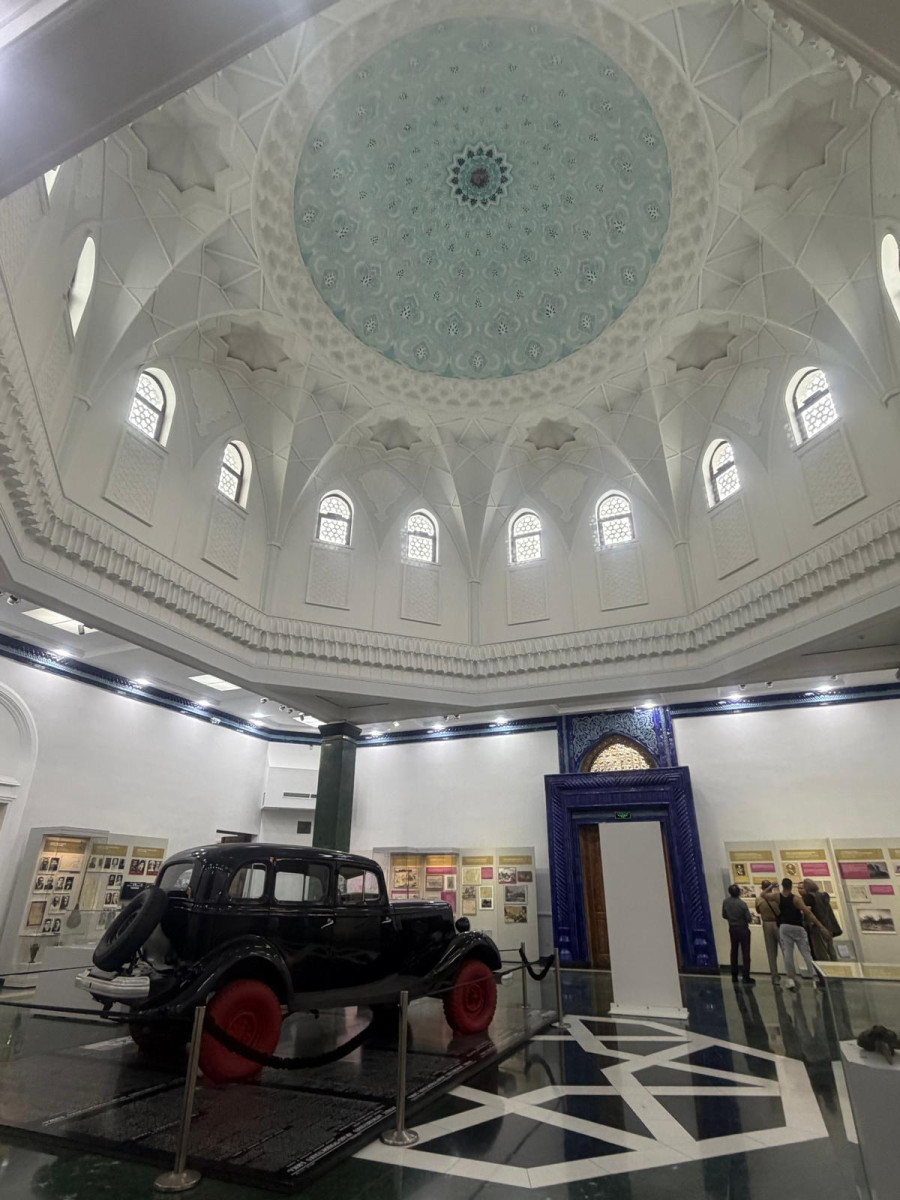
The museum with an amazing double-dome comprises 3 halls, surrounded by a carved porch. The building has many carved national motifs and is supported by 5.5-meter-high pillars. The exhibition are equals 960 m2. Expositions are arranged in chronological order covering the period from the first Russian invasion in 1873 to the restoration of historical justice from 1991.
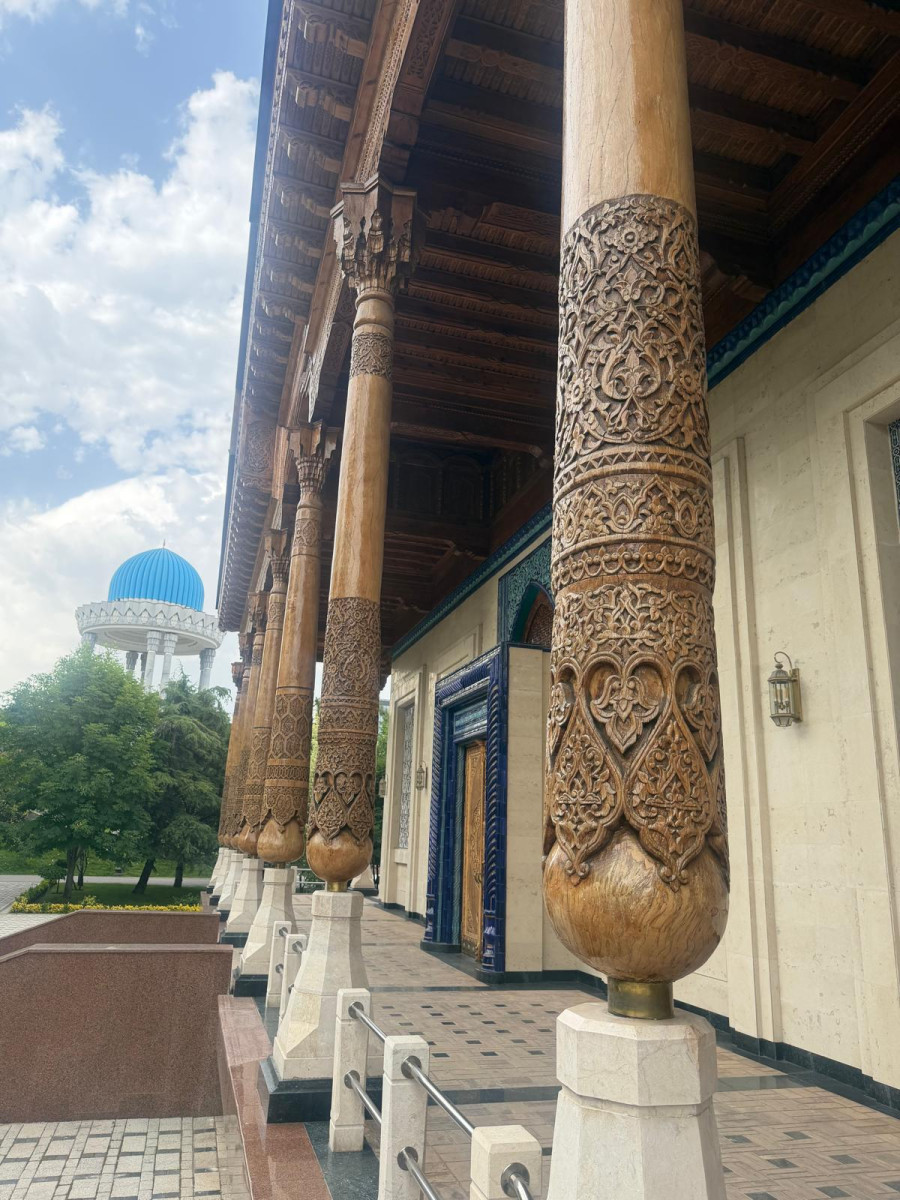
photo:©Beata Bruggeman-Sękowska
The museum exposition consists of 10 sections:
1) Colonization of Central Asia (Turkestan) by Tsarist Russia and the struggle of the local population.
2) The movement of national revival, its manifestations and practical directions. Jadidism in Uzbekistan.
3) Liquidation of Turkestan Autonomy and the beginning of the repressive policy of the Soviet state (1917-1924).
4) The movement of resisting oppression and violence. Armed uprisings in Central Asia (1918-1924).
5) The policy of “collectivization” and “dispossession” of the Soviet government, and its tragic consequences (1930-1936).
6) Political repressions in the early 30s (1929-1936).
7) Political repressions of the 1937-1938s.
8) Political repression of the 1940s-1950s.
9) The Repression of the 1980s: «Uzbek cotton affair»
10) Restoration of historical justice, perpetuation of the memory of victims of repressions, important historical events aimed at preserving and developing national values during the years of Independence (since 1991)
Read here in more detail about each section: http://muzey-xotira.uz/en/exp/
At the beginning you can find general historical information about the era of the “great game” played between the Russian and British Empires for the control of Central Asia. Further, the attention is devoted to individuals who participated in 19th century anti-Tsarist uprisings in Tashkent and Andijon. They are mentioned by name and some were hanged, others exiled or sent to prison.A significant part of the exhibition is devoted to the Soviet period, particularly the Stalinist era and the years of the Great Terror.
In the center you can see one of the most striking exhibits, a black Soviet MVD (Ministry of Interior Affairs) prisoner transport vehicle, commonly known as the “black raven.” These vehicles became a symbol of fear during the Stalinist period, as they were used by Soviet security organs to transport those arrested during political campaigns and purges. So, the vehicle represents the thousands of victims taken away during the years of repression.
The exhibition names many of the victims of repression, while the identities of individual perpetrators are generally not included. Visitors can access materials from the archives of the former KGB (the Soviet secret police), including photographs, official documents such as execution orders, signed confessions, and appeals for mercy, as well as personal belongings of those who were executed or persecuted.
The section devoted to the 1932 dekulakization campaign features a chart detailing the livestock and personal belongings confiscated from so-called kulaks and wealthy peasants. Nearby display cases contain arrest warrants, execution orders, signed confessions, and petitions submitted on behalf of imprisoned or condemned family members.
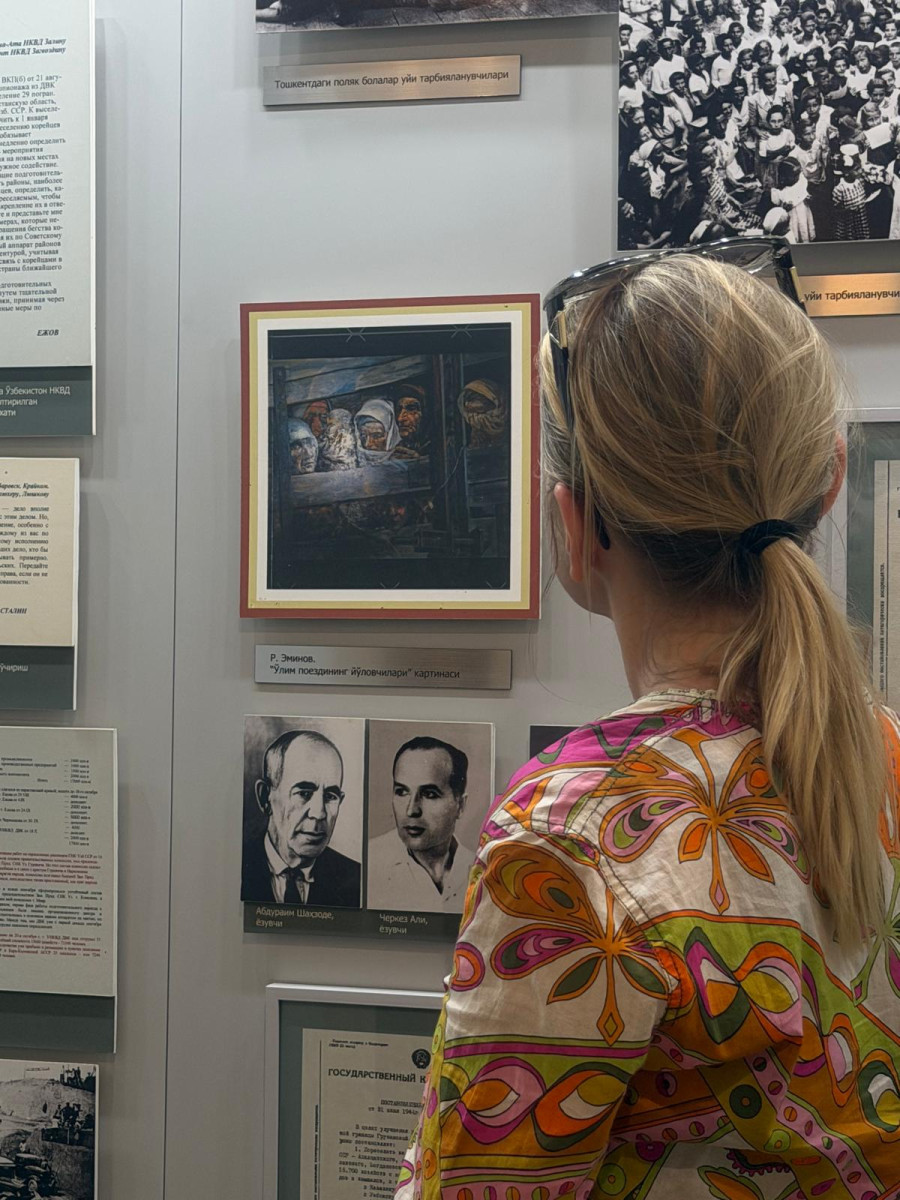
Two additional sections focus on later Soviet-era policies. One examines the wartime deportation of Crimean Tatars, Koreans, and other ethnic groups accused of collaborating with the Soviet Union’s enemies during the Second World War. The other explores Moscow’s anti-corruption campaign against the Uzbek leadership in the 1980s, commonly known as the Cotton Affair. This section also highlights the environmental degradation and public health consequences of Soviet central planning, particularly those associated with large-scale cotton production.
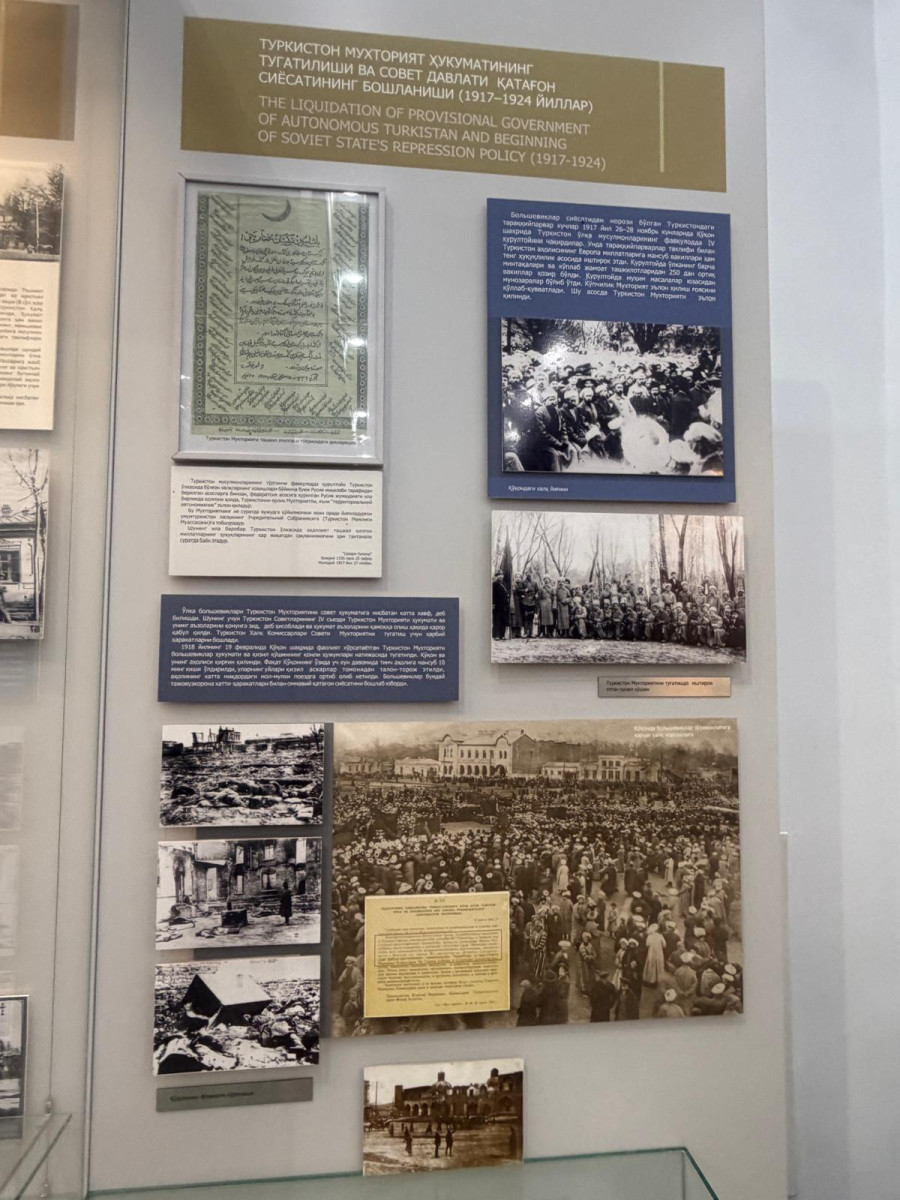
photo:©Beata Bruggeman-Sękowska
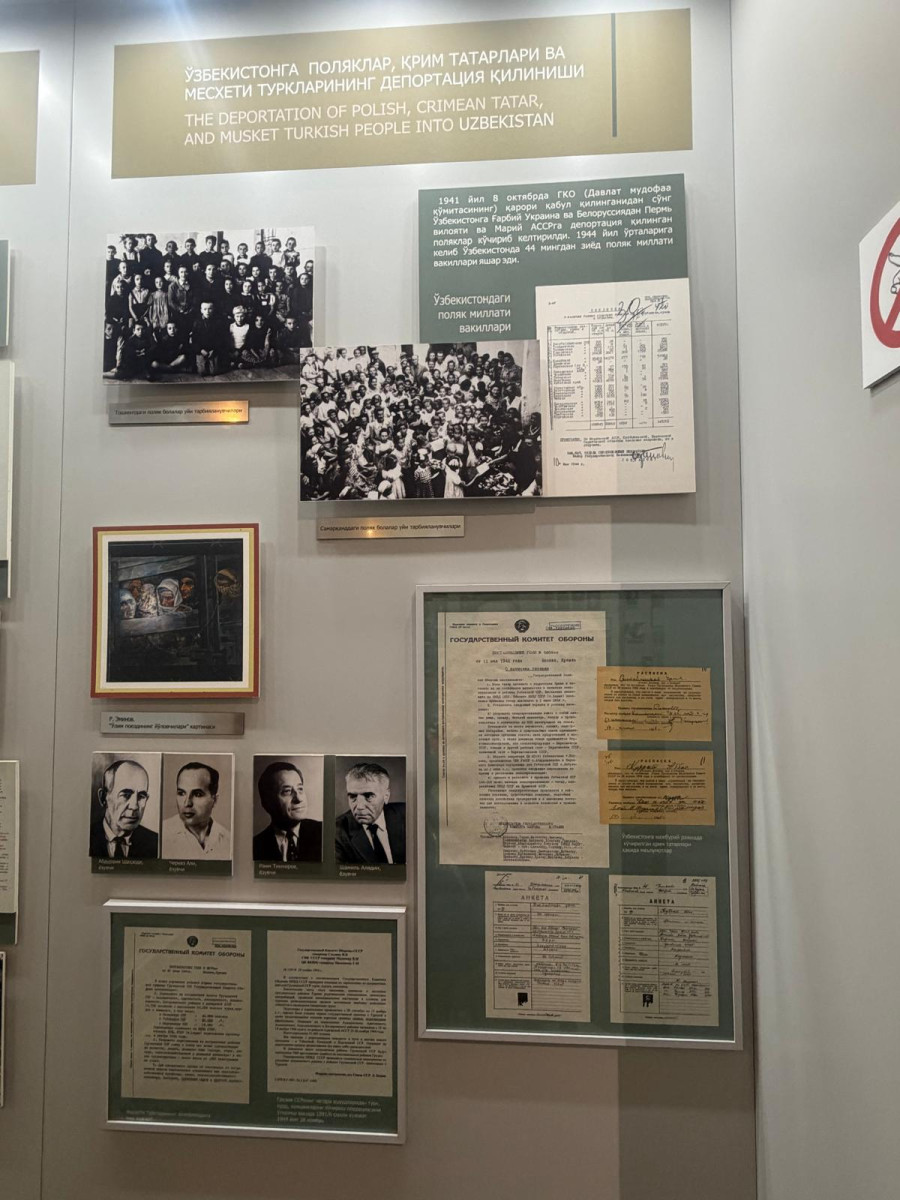
photo:©Beata Bruggeman-Sękowska
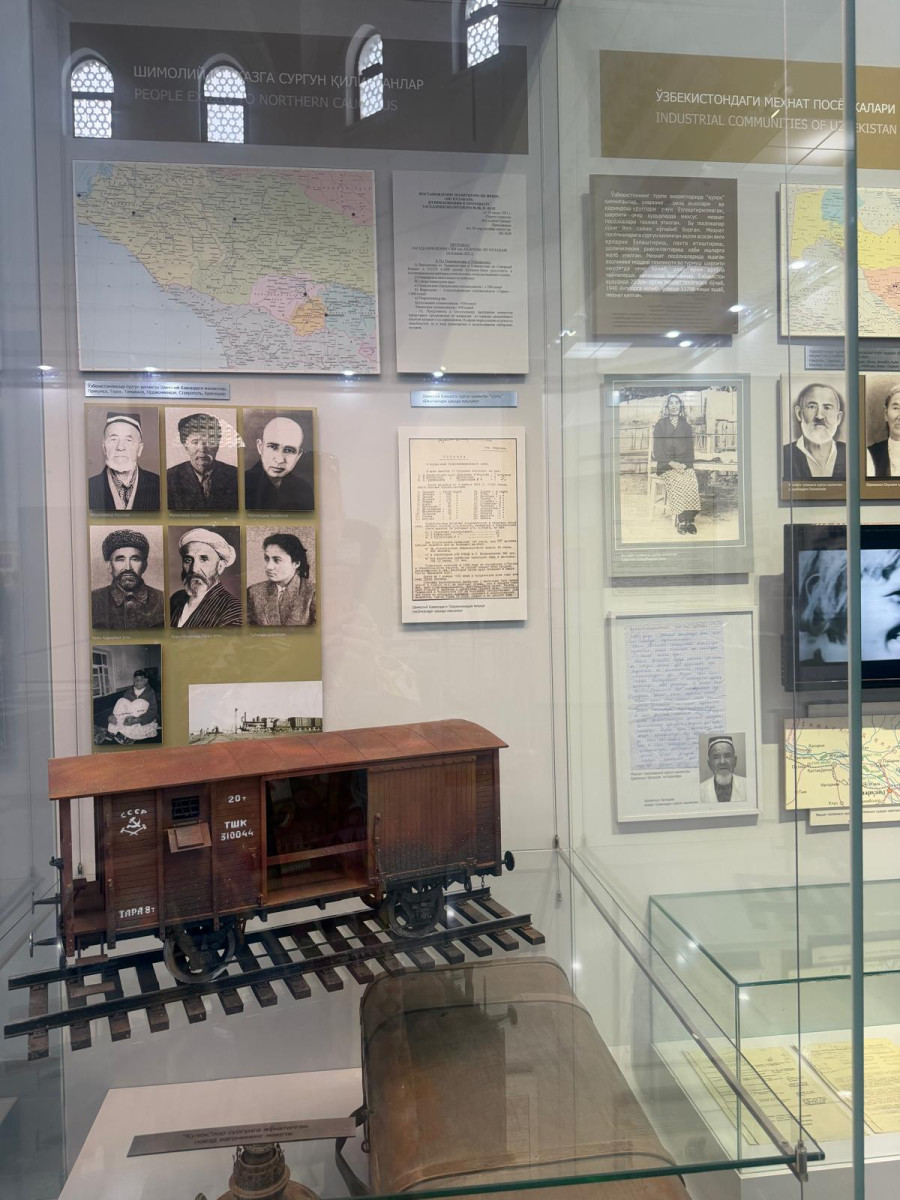
photo:©Beata Bruggeman-Sękowska
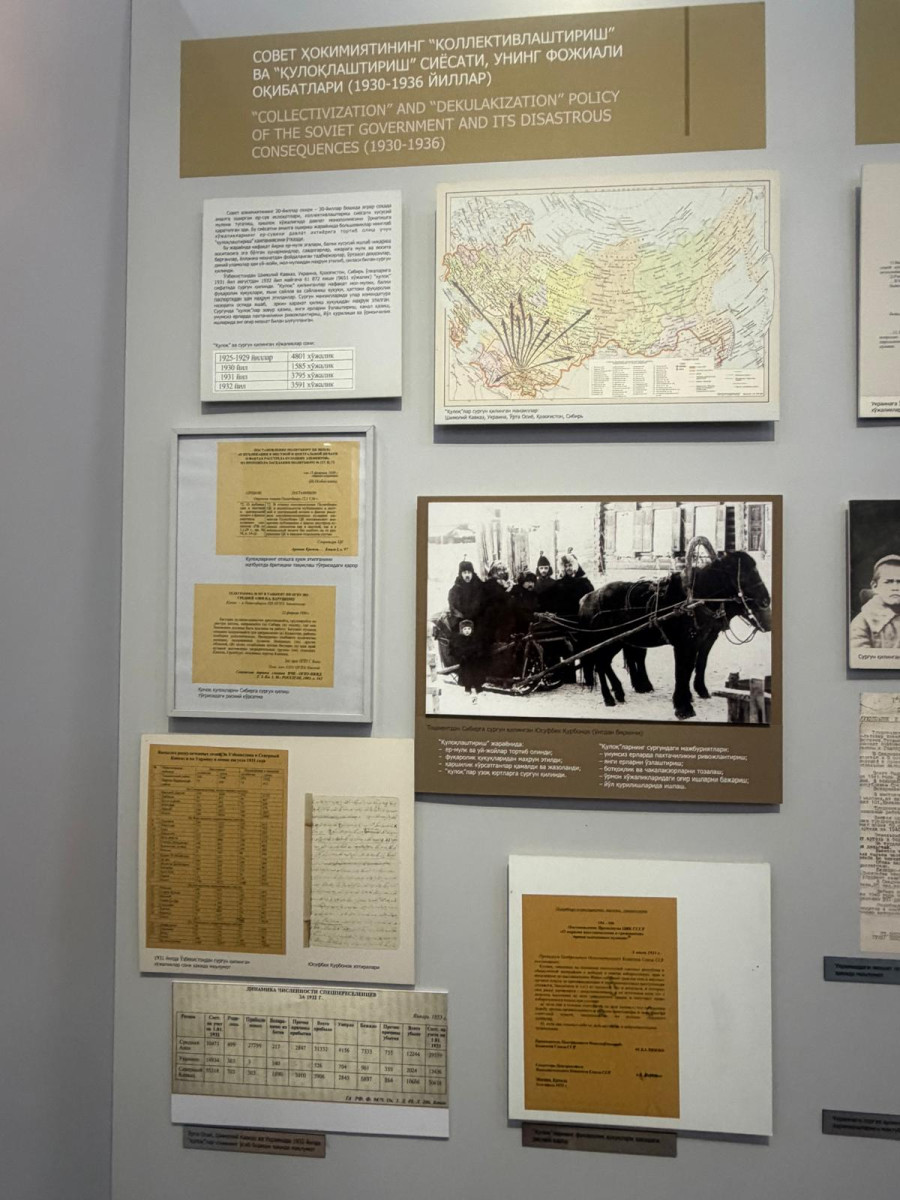
photo:©Beata Bruggeman-Sękowska
The museum is also a research institution. Here the museum staff – scholarly historians conduct deep research of archival documents related to the history of repressions and collect factual material. Through the museum fund, monographs, scientific projects, journalistic and art publications are regularly published.
State Museum of Memory of the Victims of Repression
Under the Cabinet of Ministers of the Republic of Uzbekistan
Address: Tashkent city 100184 Yunusobod district,
Amir Temur street, “Shahidlar khotirasi” square
Opening hours:
- Tuesday–Saturday: 09:00–17:00
- Sunday: 09:00–15:00
Lunch break: 13:00–14:00
Closed: Mondays and Saturdays.
Virtual visit: https://uzbekistan360.uz/ru/location/telebasna-oj-k
Sources:
https://uzbekistan.travel/en/o/museum-victims-repressions
https://eurasianet.org/tashkent-museum-allows-for-public-discussion-of-recent-past
photos:©Beata Bruggeman-Sękowska
Author: Beata Bruggeman-Sękowska is an award-winning Dutch-Polish journalist and author. She is the chief editor of the Central and Eastern Europe Center and president of the European Institute on Communist Oppression. Born in Warsaw, Poland and currently residing in the Netherlands, Beata has roots in Lviv, Ukraine and has Armenian heritage.